The two most dangerous words holding you back
There is a particularly difficult roadblock we all face when we are trying to create something new. It’s wisdom. It whispers that you already have the information you need, that you’ve been around this block before, that the person explaining this to you doesn’t quite understand how complicated your situation is. It says: I know.
Those two words may be the most expensive phrase in the English language. They close the door on curiosity at the exact moment you need it most. And the cruel irony? The more experience you accumulate, the louder that voice gets.
“Expertise is a gift that slowly builds a cage around your thinking.”
Expertise is genuinely valuable, until it isn’t. The surgeon who has performed ten thousand procedures has hard-won pattern recognition. But that same surgeon may be the last person in the room to consider a novel approach because every signal in their body says: I’ve seen this before. Experts paint themselves into metaphorical corners not through arrogance, but through accumulated certainty. They know too much about why things won’t work.
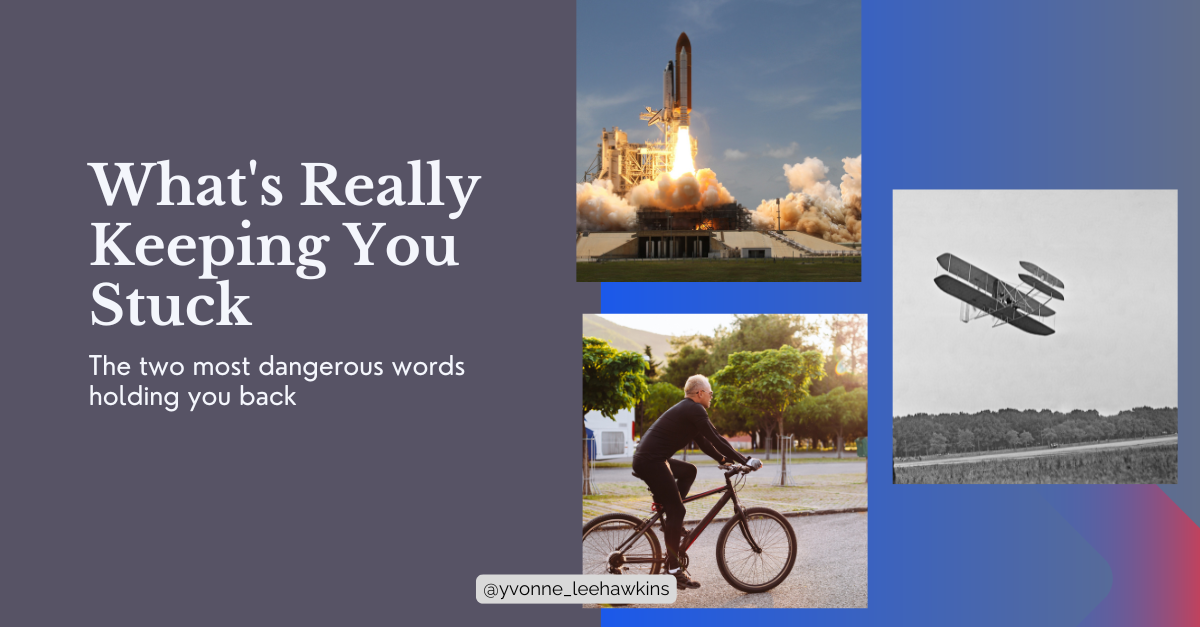
History is littered with examples of newcomers discovering what veterans declared impossible. The Wright brothers found a way to make “heavier than air” vehicles fly. Roger Bannister ran a sub-4-minute mile despite experts saying it was humanly impossible. It wasn’t that the experts were stupid — it was that their knowledge came with invisible fences. The outsider didn’t know where the fence was, so they walked right through it. Naivety, it turns out, is a feature, not a flaw.
The Danger of “I Know That”
Here’s what happens when you hear a piece of advice and think I know that: you stop listening. You stop applying. You file it under information received and move on. But knowing and doing are completely different entities. You may know all about gravity and aerodynamics, but until you get on a bicycle, fall again and again and finally get your balance, you don’t KNOW how to ride a bicycle (even if you have a PhD in physics).
You may know that consistent sleep improves performance, that journaling reduces anxiety, that asking for help is a sign of strength. Yet here you are still trying to work through burnout. Knowing it hasn’t changed your circumstance I’ve seen this in working with teams from supply chain all the way to aerospace engine design.
The “I know that” trap is seductive because it protects your ego. If you already know it, you can’t be surprised by it, can’t be challenged by it, can’t be changed by it. Remaining stuck becomes oddly comfortable when you can frame it as simply waiting for information you don’t have yet — while simultaneously believing you already have everything you need.
The antidote isn’t ignorance. It’s what researchers call beginner’s mind — the willingness to approach even familiar territory as though you’ve never been there. Not pretending you have no knowledge, but holding that knowledge loosely, staying genuinely open to being wrong or incomplete, and reassessing your assumptions over and over again.
Why Success Requires Naivety and Tenacity Together
Naivety alone produces enthusiasm without direction — the classic first-time entrepreneur who doesn’t know what they don’t know and runs straight into walls. Tenacity alone produces stubborn repetition of broken strategies — the same approach, tried harder, failing again. But combine them? You get something powerful: someone willing to try things that “can’t work,” and willing to keep going when they don’t immediately.
The most remarkable breakthroughs tend to come from people who are expert enough to understand a problem deeply but naive enough — or humble enough — to question the assumptions underneath it. They don’t accept the terms of the puzzle as given. They ask whether the puzzle itself is wrong.
You don’t need to throw away what you know. You need to stop letting it have a veto over what you try.
Some of the most fun work I’ve done in my career was when I didn’t know better. I knew enough to have direction and believe the outcome was possible, but I wasn’t married to doing it in the usual way (mostly because I wasn’t an expert in the usual ways). I was once responsible for the construction and build of a new fulfillment facility that needed to ramp up half complete while we ramped down the other half and moved it across the state. Looking back, it was impossible. The only reason it worked was because I (and several willing experts around me) had no idea what we were getting ourselves into. Our enthusiasm and commitment to figuring it out, landed us with a successful outcome.
5 Things To Do Today To Get Unstuck
If you’re feeling stuck, on a project, on work, or even in your relationships, get out of your regular routine and try these five things.
- Do the thing you “already know” you should do. Pick one piece of advice you’ve nodded at for months without acting on. Don’t re-read it. Don’t think it through again. Just do a five-minute version of it today — right now, if possible. The gap between knowing and doing can only be reached through action, not reflection.
- Ask a question you think is obvious. Find someone in a field you care about and ask them the most basic question you’ve been too embarrassed to ask. The “stupid” questions are where breakthrough thinking lives. Experts stopped asking them years ago. You asking them allows room for new data.
- Write down every assumption you’re making. Take whatever you’re stuck on and list every assumption baked into your approach. Then circle one and ask: what if this is simply wrong? Could the opposite also be true? If this weren’t a constraint, how would we do it? Constraints we treat as facts are often just habits. Finding even one false assumption can collapse months of stagnation instantly.
- Talk to someone who has never done what you do. Not for their expertise, but for their questions. Outsiders ask things that would never occur to an insider, because they haven’t learned yet what’s “not worth asking.” Schedule thirty minutes with someone who knows nothing about your field and let their confusion be your flashlight. Bonus points if they are a kid. Children’s superpower is their curiosity. I can’t tell you how many times I’ve found something I missed while trying to explain it to one of my kids.
- Set a deadline and make it embarrassingly short. Stuck people have one thing in common: they’ve given themselves infinite time. Pick the thing you’ve been circling and give yourself 48 hours to produce any version of it . Let it be imperfect, incomplete, rough. Done and imperfect will teach you more than perfect-and-pending ever will.
The path out of stuck is rarely through gathering more information. It’s through treating what you already know with just enough skepticism to try something new — and just enough nerve to keep going when it doesn’t immediately work. The beginner’s advantage is real. The question is whether you’re willing to claim it. And then try a hundred ways to improve it.
***
Did this topic add value to you? Please like and subscribe if you want more topics like this, or DM me. I always love suggestions and feedback!
Yvonne Lee-Hawkins is a Holistic Career & Burnout Coach supporting high-performing professionals through career transitions, leadership challenges, and burnout recovery.
She also helps recent graduates land their first career. You can find out more on her website, or follow her on LinkedIn, Medium, or Instagram.
If you know someone who could use help beginning or transforming their career, have them schedule a call here.