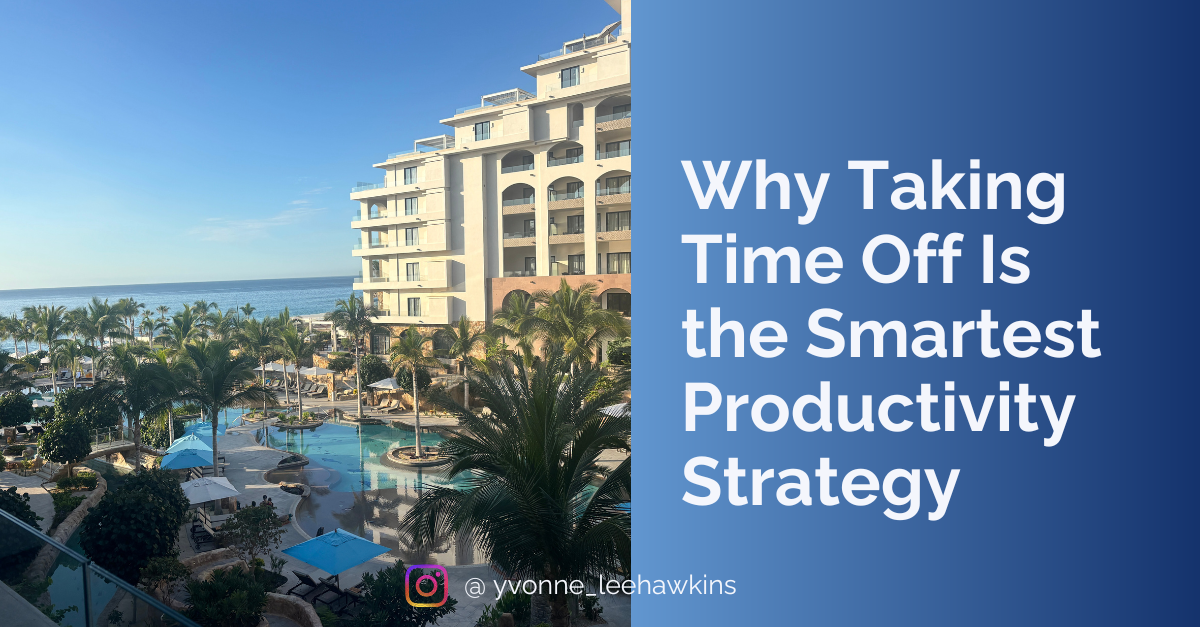
This week I am posting from a much needed family vacation. It has been over two years since we’ve gone on a vacation. During the last one, I was so burned out, I was barely able to enjoy time with my family. While we sat by the pool, I was mentally preparing for a document review and still mentally with the teams I was leading in Europe, India, and China. Unplugging felt like such an uncomfortable shock, that I was barely present in a meaningful way. I felt guilty, both for taking time off and for not being fully engaged with my husband and kids. It was a lose-lose situation.
Corporate culture glorifies hustle and praises those who “never take a day off.” So it’s no surprise that some companies have even gone to unlimited PTO (Paid time Off) because when it is unlimited, data shows, people use even less. Plus, as a business bonus, companies don’t have to pay out your unused PTO if you leave, saving the business thousands of dollars in labor cost. What is sold as a benefit to employees, is actually a benefit to the bottom line.
In these environments, where hustle and grind are the gods of work, rest can feel like a luxury, or worse, a sign of weakness. Yet science and experience both tell a different story. Taking time off, whether that means a full vacation, a weekend unplug, or simply building intentional recovery into your days, is no indulgence. It’s strategy. It’s how you refill your energy tank, reignite creativity, and return to your work and relationships more present and powerful than before.
What Happens When You Stop to Rest
When you rest, your body and brain shift from “doing” mode into “being” mode. This is when real recovery happens. Sleep, downtime, and even boredom activate the default mode network, the part of your brain responsible for insight, creativity, and self-reflection. It’s why your best ideas often come in the shower, during a walk, or on vacation when you’ve stopped trying so hard.
Recovery isn’t just about physical rejuvenation, it’s about resetting your nervous system. Chronic busyness keeps us in a state of low-level stress that drains our energy, dampens our mood, and impairs decision-making. Taking breaks helps lower cortisol levels, improve emotional regulation, and increase our capacity to focus deeply when we return to work.
Athletes understand this well. They know recovery is what allows for growth, strength, and peak performance. Professionals often forget the same rule applies without rest, there is no sustainable success.
How Time Off Fuels Creativity, Productivity, and Connection
Creativity
Downtime activates divergent thinking—the kind that connects seemingly unrelated ideas and sparks innovation. Studies from Stanford and the University of California show that people are 60% more creative after walking or taking short breaks compared to those who stay glued to their desks. Vacations, in particular, expand our mental horizons; new environments and cultures stimulate new perspectives.
Productivity
Counterintuitive as it sounds, working less often leads to getting more done. A famous study by the Draugiem Group using time-tracking software found that the most productive employees worked in bursts of about 52 minutes followed by a 17-minute break. Similarly, companies that encourage time off often see lower burnout rates, higher engagement, and increased innovation.
Connection
Time away from work strengthens your relationships—with others and yourself. When you’re constantly in “go” mode, it’s easy to lose sight of what really matters. Taking time off allows you to reconnect with loved ones, engage in hobbies that bring joy, and rebuild the emotional energy that makes you a better partner, parent, friend, and leader.
The Global PTO Gap
A recent global comparison of paid time off usage revealed something striking while Americans earn an average of 10–15 days of paid time off per year, many don’t use it. In contrast, European countries like France, Germany, and Spain regularly take 25–30 days off—and they actually use them.
The U.S. has developed a culture of “PTO guilt,” where taking time away can feel risky or irresponsible. Workers stockpile vacation days as if saving them shows commitment, but the result is often the opposite: burnout, disengagement, and declining performance. According to research from the U.S. Travel Association, over half of American workers leave vacation days unused each year—essentially giving back free labor and sacrificing their well-being in the process.
When compared internationally, it’s clear that other countries understand something many Americans overlook: rest isn’t a reward for hard work. It’s a vital component of doing good work.
Using Time Off as a Performance Strategy
When we shift our mindset from “time off” as lost productivity to “time off” as strategic recovery, everything changes. Leaders who actively model and encourage rest foster higher-performing teams. Employees who take regular breaks and vacations are less likely to experience burnout, have higher job satisfaction, and are more creative problem-solvers.
Think of your brain like a high-performance engine. It can’t run at full speed indefinitely without overheating. Strategic pauses—daily, weekly, and seasonally—are your built-in maintenance schedule. Without them, even the best performers burn out.
Five Ways to Build Rest and Recovery into Your Life
- Micro-Breaks Every Day
Start small. Take 5–10 minutes every hour to step away from your desk, stretch, or breathe deeply. Studies show these “micro-breaks” can reduce fatigue and improve focus. Even a quick walk outside can reset your mood and boost creative thinking. - Plan “White Space” in Your Calendar
Instead of filling every available slot, intentionally block time for nothing. Protect it like a meeting with your boss. This mental white space allows you to think strategically, reflect, and prevent decision fatigue. - Use Your PTO—on Purpose
Don’t wait for burnout to force you into rest. Schedule vacations and long weekends proactively. Plan activities that refuel you, not just ones that distract you. Whether it’s hiking, reading, traveling, or sleeping in, choose what genuinely restores you. - Create Tech-Free Zones
Pick specific times or days to unplug completely. No email. No social media. No “just checking.” Your nervous system needs genuine downtime from digital stimulation to recover fully. - Honor Weekly Rest Cycles
Borrow from ancient wisdom: build a modern “Sabbath.” Designate one day each week for recovery—whatever that looks like for you. Use it to connect with loved ones, enjoy nature, or simply rest. Over time, this ritual becomes your most powerful reset button.
The Bottom Line
Taking time off is not a sign of laziness, it’s a demonstration of wisdom. It’s a conscious choice to sustain the energy, creativity, and emotional resilience that true success requires. The world doesn’t need more exhausted achievers. It needs more rested, inspired, and fully alive people doing work that matters.
So, if you’ve been waiting for permission to rest—consider this it. Your best ideas, healthiest relationships, and most productive seasons are waiting on the other side of the pause.
As for me, this time I am fully unplugged (well, mostly because checking those teams notifications is a hard habit to break). However, I am fully present to my son saying “mom, watch this” as he jumps into the pool for the millionth time. I don’t hesitate when my teenager asks me to go into the lazy river, or my other teen wants to discuss the latest drama in the anime series she’s reading. I don’t feel guilty for spending time with the most important people in my life in what I know are limited moments. One day they’ll be too busy to vacation with us. One day they’ll have their own jobs and families to prioritize. But for now, I use this time to fill up on connection, sun, and fun.
Action Step: Before you close this tab, open your calendar. Pick one day in the next month and mark it “OFF.” Then, plan something that truly nourishes you. Whether it’s time with family, or solo time to just relax, because the next chapter of your best work begins when you finally give yourself a break.
***
Did this topic add value to you? Please like and subscribe if you want more topics like this, or DM me. I always love suggestions and feedback!
Yvonne Lee-Hawkins, IPHM, is a holistic Wellness coach, facilitator, writer, and mother who spent 20 years in corporate and leadership functions while also being a wife and mom to three amazing kids. You can find out more on her website, or follow her on Instagram, LinkedIn, or Medium. If you are ready to elevate your life, schedule a call here.
Lastly, sharing is caring. If you know someone who would benefit from this article, please forward it to them!